Business Library 2.0
Admin Sign In 

Investment Books: A Core Collection  Tags: investment investing books  

A core collection of books on all aspects of investing
Last update: Oct 23rd, 2009 URL: http://businesslibrary.uflib.ufl.edu/investmentbooks  Print Guide  RSS Updates

Home             Print Page


Investment Books: A - Z

"Life is a long lesson in humility."
— James M. Barrie

A  |  B  |   C  |   D  |   E  |   F  |   G  |   H  |   I  |   L  |   M  |  N  |  O  |   P  |   R  |   S  |   T  |   U  |   W  |  Y

  • Against the Gods: The Remarkable Story of Risk - By Peter Bernstein
    Call Number: HD61 .B4666 1996 (Library West)
    ISBN/ISSN: 0471121045. John Wiley, 1996. 383 p.
    In this unique exploration of the role of risk in our society, Peter Bernstein argues that the notion of bringing risk under control is one of the central ideas that distinguishes modern times from the distant past. Against the Gods chronicles the remarkable intellectual adventure that liberated humanity from oracles and soothsayers by means of the powerful tools of risk management that are available to us today. The Economist "[A] challenging book, one that may change forever the way people think about the world." -Worth "No one else could have written a book of such central importance with so much charm and excitement." -Robert Heilbroner author, The Worldly Philosophers "With his wonderful knowledge of the history and current manifestations of risk, Peter Bernstein brings us Against the Gods. Nothing like it will come out of the financial world this year or ever. I speak carefully: no one should miss it." -John Kenneth Galbraith Professor of Economics Emeritus, Harvard University.
  • All About Bonds, Bond Mutual Funds, and Bond ETfs - By Esme Faerber
    Call Number: HG4651.F29 2009 (Library West)
    ISBN/ISSN: 9780071544276. 3rd ed. McGraw-Hill, 2009. 326 p. $19.95
    Bonds have come a long way in recent years. No longer just a relatively safe and secure investment, bonds now offer the potential for capital appreciation in addition to interest income. All About Bonds, Bond Mutual Funds, and Bond ETFs is the key to understanding both traditional and new types of bond investments. This detailed but accessible introduction covers everything from basic bond characteristics to fixed-income investment techniques. You'll gain a thorough education on such topics as yield, liquidity, duration, convexity, valuation, and emerging markets and find the answers to many questions a bond investor will ask, such as: What percentage of my portfolio should be dedicated to bonds? What are the newest products and where do I find them? What are the risks involved with investing in bonds, bond mutual funds and bond ETFs? How can I use the Internet to my advantage?
  • The Art of Asset Allocation: Principles and Investment Strategies for Any MArket - By David M. Darst
    Call Number: HG4529.5 .D37 2008 (Library West)
    ISBN/ISSN: 9780071592949. 2nd ed. McGraw-Hill, 2008. 408 p. $39.95
    A global leader and preeminent expert in asset allocation, David Darst delivers his masterwork on the topic. In a fully updated and expanded second edition of The Art of Asset Allocation, Morgan Stanley's Chief Investment Strategist covers the historic market events, instruments, asset classes, and economic forces that investors need to be aware of as they create asset-building portfolios. He then explains how to use modern asset allocation concepts and tools to augment returns and control risks in a wide range of financial market environments. This completely revised edition shows how to achieve asset balance with the author's proven methods, decades of expertise, relevant charts, practical tools, and astute analyses.
  • The Ascent of Money: A Financial History of the World - By Niall Ferguson
    Call Number: HG171.F47 2008 (Library West)
    ISBN/ISSN: 9781594201929. Penguin Press, 2008. 441 p. $29.95
    Niall Ferguson follows the money to tell the human story behind the evolution of finance, from its origins in ancient Mesopotamia to the latest upheavals. To Christians, love of it is the root of all evil. To generals, it's the sinews of war. To revolutionaries, it's the chains of labor. But historian Ferguson shows that finance is in fact the foundation of human progress. What's more, he reveals financial history as the essential backstory behind all history. Through Ferguson's expert lens, for example, the civilization of the Renaissance looks very different: a boom in the market for art and architecture made possible when Italian bankers adopted Arabic mathematics. The rise of the Dutch republic is reinterpreted as the triumph of the world's first modern bond market over insolvent Habsburg absolutism. Yet the central lesson of financial history is that, sooner or later, every bubble bursts.--From publisher description.
  • Barron's Finance and Investment Handbook - By John Downes and Jordan Elliot Goodman
    Call Number: HG173 .D66 2006 (Library West)
    ISBN/ISSN: 9780764159923. 7th ed. Barron's, 2007. 1220 p. $39.99.
    Previous editions of this comprehensive reference book have been called “required reading for students, investors, and writers” by USA Today, and “a teeming reservoir of information” by the Oakland Tribune. Updated to reflect the 2006 investment climate, the new edition of Barron’s Finance and Investment Handbook presents a financial dictionary of more than 5,000 terms, an analysis of many current investment opportunities, guidelines for non-experts on what to look for when reading corporate reports and financial news sources, an up-to-date directory of hundreds of publicly traded corporations in the United States and Canada, and a directory listing the names and addresses of brokerage houses, mutual funds families, banks, federal and state regulators, and other major financial institutions. Here in one big volume is indispensable information for planning and maintaining a healthy investment portfolio.
  • the Battle for Wall Street: Behind the Lines in the Struggle That Pushed an Industry into Turmoil - By Richard Goldberg
    Call Number: HG4928.5 .G65 2009 (Library West)
    ISBN/ISSN: 9780470222799. John Wiley, 2009. 240 p. $29.95
    This title presents an insider's look at the changing balance of power on Wall Street. "The Battle for Wall Street" follows the struggle for power between two giants: the sellers, traditional commercial and investments banks; and the buyers, upstart hedge funds, private equity firms and the like. The battle is about winning the hearts, minds, and - yes, the wallets - of global investors. This battle is still running its course, and with the insights of industry veteran Richard Goldberg, who has had a front row seat, readers will gain a detailed understanding as to what, exactly, is going on within this dynamic arena, specifically the forces behind the shift of power from the old sell side gatekeepers to the new buy side players.
  • Beating the Street - By Peter Lynch
    Call Number: HG4921 .L96 1993 (Library West)
    ISBN/ISSN: 0671759159. Simon & Schuster, 1993. 318 p. $15.00.
    Develop a Winning Investment Strategy -- with Expert Advice from "The Nation's #1 Money Manager" Peter Lynch's "invest in what you know" strategy has made him a household name with investors both big and small. An important key to investing, Lynch says, is to remember that stocks are not lottery tickets. There's a company behind every stock and a reason companies -- and their stocks -- perform the way they do. In this book Peter Lynch shows you how you can become an expert in a company and how you can build a profitable investment portfolio, based on your own experience and insights and on straightforward do-it-yourself research. There's no reason the individual investor can't match wits with the experts, and this book will show you how. In "Beating the Street," Lynch for the first time: * Explains how to devise a mutual fund strategy * Shows how he goes about picking stocks, step-by-step * Describes how the individual investor can improve his or her investment performance to rival that of the experts of the investment clubs.
  • Benjamin Graham: The Memoirs of the Dean of Wall Street - By Benjamin Graham. Edited by Benjamin Seymour Chatman
    Call Number: HG172.G68 A3 1996 (Library West)
    ISBN/ISSN: 0070242690. McGraw-Hill, 1996. 351 p. $83.95.
    When Benjamin Graham died in 1976 at age 82, he had achieved legendary status on Wall Street. He had laid the foundation of modern security analysis, inspiring legions of disciples and personally mentoring such up-and-comers as Warren Buffett (who went to work for Graham in 1954). Graham was widely regarded as brilliant, successful, and ethical, a rare trinity of attributes in the rough-and-tumble world of investing. In his later years, Graham wrote a memoir that looked back on the early, seminal decades of his colorful life. Twenty years after his death, this work is being published at last. Brimming with details that will captivate investors and history buffs alike, these pages evoke one of the richest most eventful lives of the century. Graham weaves an eloquent tale of talent and good fortune, viewed against the dynamic backdrop of New York and Wall Street.
  • Beyond Greed and Fear: Understanding Behavioral Finance and the Psychology of Investing - By Hersh Shefrin
    Call Number: HG4515.15.S53 2000 (Library West)
    ISBN/ISSN: 0875848729. Harvard Business School Press, 2000. 416 p. $39.95.
    Bias, sentiment and personal opinions cloud the judgement of even the best Wall Street investors, so why do most financial decision-making models fail to factor in basic human nature? In this work, a guide to what really influences the decision-making process, Hersh Shefrin applies psychological research to stock selection, financial services, and corporate financial strategy. Through colourful, often real-world examples, Shefrin points out the common mistakes that money managers, security analysts, financial planners, investment bankers and corporate leaders make so that readers gain insights into their own financial decisions.
  • The Business of Investment Banking: A Comprehensive Overview - By K. Thomas Liaw
    Call Number: HG4534.L528 2006 (Library West)
    ISBN/ISSN: 9780471739647. 2nd ed. Wiley, 2006. 440 p. $125.00
    In this new edition, Dr. Liaw offers a substantial revision of his bestselling text, responding to requests from educators and professionals alike.Incorporating the most recent developments in the industry, the author describes: financial holding companies, full-service investment banks, boutique investment banks, and their lines of businesses; strategies for risk management, such as market risk, credit risk, operating risk, reputation risk, legal risk, and funding risk; career opportunities in investment banking, career paths, recruitment, and the application and interview process; key investment banking operations, including venture capital and buyouts, M&A services, equity underwriting, debt underwriting, securitization, financial engineering, investment management, and securities services; fundamentals for successful trading, arbitrage strategies, and technical trading techniques; regulatory issues and strategies relating to the Sarbanes-Oxley Act of 2002 and analyst conflict of interest; and ethics and professionalism.In addition, Dr.Liaw discusses investment banking opportunities in China, Japan, the EMU, and emerging markets, as well as the special challenges that come with globalization. A staple of industry training programs and a valued reference among banking professionals in its first edition, "The Business of Investment Banking, Second Edition" adds a wealth of new information to an already indispensable practical resource.
 

Investment Books: C

  • Capital Ideas Evolving - Peter L. Bernstein
    Call Number: HG173 .B473 2007 (Library West)
    ISBN/ISSN: 9780471731733. Wiley, 2007. 282 p. $16.95
    Describes the changes in the practice of investing that relies heavily on complex mathematics, derivatives, hedging, and hyperactive trading. This book provides insights on how key finance theories have evolved from their ivory tower formulation to profitable application by portfolio managers. "A lot has happened in the financial markets since 1992, when Peter Bernstein wrote his seminal Capital Ideas. Happily, Peter has taken up his facile pen again to describe these changes, a virtual revolution in the practice of investing that relies heavily on complex mathematics, derivatives, hedging, and hyperactive trading. This fine and eminently readable book is unlikely to be surpassed as the definitive chronicle of a truly historic era."
    —John C. Bogle, founder of The Vanguard Group and author, The Little Book of Common Sense Investing

  • Capital Ideas: The Improbable Origins of Modern Wall Street - By Peter L. Bernstein
    Call Number: HG173 .B47 1992 (Library West)
    ISBN/ISSN: 0029030110. Free Press, 1992. 340 p
    Capital Ideas traces the origins of modern Wall Street, from the pioneering work of early scholars and the development of new theories in risk, valuation, and investment returns, to the actual implementation of these theories in the real world of investment management. Bernstein brings to life a variety of brilliant academics who have contributed to modern investment theory over the years: Louis Bachelier, Harry Markowitz, William Sharpe, Fischer Black, Myron Scholes, Robert Merton, Franco Modigliani, and Merton Miller. Filled with in-depth insights and timeless advice, Capital Ideas reveals how the unique contributions of these talented individuals profoundly changed the practice of investment management as we know it today.
  • The Chicago Board of Trade Handbook of Futures and Options - Chicago Board of Trade
    Call Number: HG6024.U6C45 2006 (Library West)
    ISBN/ISSN: 0071457518. McGraw-Hill, 2006. 444 p. $75.00
    The futures and options bible from the world's first, and America's largest, futures exchange

    Through nine editions over three decades, the Chicago Board of Trade (CBOT) has provided futures and options traders with the self-published Commodity Trading Manual. Now the CBOT has entered into an exclusive agreement with McGraw-Hill to bring you this vital book. The Chicago Board of Trade Handbook of Futures and Options delivers valuable information on everything from the uses and purposes of the futures market to nuts-and-bolts descriptions of day-to-day exchange operations.

  • Commodity Trading Manual
    Call Number: HG6049 .C65x 1998 (Library West, Business Reference)
    ISBN/ISSN: 0814405118. 9th edition, Chicago Board of Trade, 1998. 410 p. $55.00.
    The 1998 edition of the Commodity Trading Manual, the first and most accessible guide to the futures industry, continues to provide new industry professionals and potential end users with a comprehensive overview of the market. The Commodity Trading Manual looks both at futures' past, from Ancient Greece to Old Chicago, and futures' future, with updated coverage of major industry trends the rise of new and international markets, OTC derivatives, and electronic trading. Chapters end with annotated bibliographies. A glossary, a directory of major futures exchanges world-wide, and specifications for the most actively traded futures and options contracts are also included.
  • Common Sense on Mutual Funds: New Imperatives for the Intelligent Investor - by John C. Bogle.
    Call Number: HG4530 . B6333 1999 (Library West)
    ISBN/ISSN: 0471295434. John Wiley $ Sons, 1999. 468 p. $24.95
    Vanguard Group founder and chair Bogle (Bogle on Mutual Funds) shares his classic ideas on how best to maximize investments in mutual funds, showing investors how to embrace simplicity and revolutionize their portfolios. The world's largest no-load mutual fund group, Vanguard has risen to the top of the heap of fund companies, following Bogle's advice on such topics as tactical allocation, long-term investing, investment relativism, rapid turnover, owning the right number of funds, and selecting index funds.
  • Common Stocks and Uncommon Profits - by Philip A. Fisher.
    Call Number: HG4661 .F5 1996 (Library West)
    ISBN/ISSN: 047111927X. John Wiley, 1996 (originally published in 1958). 288 p. $19.95
    Widely respected and admired, Philip Fisher is among the most influential investors of all time. His investment philosophies, introduced almost forty years ago, are not only studied and applied by today's finance professionals, but are also regarded by many as gospel. He recorded these philosophies in 'Common Stocks and Uncommon Profits', a book considered invaluable reading when it was first published in 1958, and a must-read today.
  • Contrarian Investment Strategies: The Next Generation : Beat the Market by Going Against the Crowd - by David N. Dreman.
    Call Number: HG6041 .D658 1998 (Library West)
    ISBN/ISSN: 0684813505. Simon & Schuster. 1998. 464 p. $24.50
    All stock-market investors embrace the motto "Buy low, sell high." Few act accordingly, however, for to do so would require that we go against the crowd, buying stocks that are out of favor and selling Wall Street's darlings. Powerful psychological forces prevent us from pursuing a contrarian investment strategy, although it consistently beats the market, according to David Dreman, a seasoned money manager and long-time columnist for Forbes magazine. One of the Street's best-known and most articulate contrarians, Dreman has updated his 1982 investment classic, Contrarian Investment Strategies, using recent research on investor psychology. His revised book combines proven techniques for selecting undervalued stocks with fresh insights on how to defy, and thereby profit from, the popular fears or enthusiasms of the moment.
  • Credit Derivatives: A Primer on Credit Risk , Modeling, and Instruments - by George Chacko.
    Call Number: HG6024.A3 C75 2006 (Library West)
    ISBN/ISSN: 0131467441. Wharton School Pub.., 2006. 256 p. $69.99
    Every company faces credit risk. Credit derivatives are among the most powerful tools available for managing it. Once restricted to the financial industry, they are now widely used by businesses of all kinds - and all financial professionals need to understand them. Credit Derivatives explains these tools simply, clearly, and rigorously: what they do, how they work, and how to use them.
  • The Credit Derivatives Handbook: Global Perspectives, Innovations, and Market Drivers - Edited by Greg N. Gregoriou and Paul A.U. Ali.
    Call Number: HG6024.A3 C753 2009 (Library West)
    ISBN/ISSN: 9780071549523. 0071549528. McGraw-Hill, 2009. 406 p. $95.00.
    In The Credit Derivatives Handbook, some of the world's sharpest financial and legal minds come together to discuss how credit derivatives have evolved from tools restricted to the banking industry into flexible and customizable instruments used by investors of all kinds. You will come away with the knowledge and insight needed to measure and value risk, as well as the ability to put credit derivatives to work. Over fifteen contributors provide in-depth analyses of subjects in their respective areas of expertise.
 

Investment Books: D - F

  • Dean LeBaron's Treasury of Investment Wisdom: 30 Great Investing Minds - by Dean LeBaron and Romesh Vaitilingam.
    Call Number: HG4521 .L332 2002 (Library West)
    ISBN/ISSN: 0471152943. Wiley, 2002. 310 p. $24.95
    Market thoughts, predictions, and insights that can't be found anywhere else. With clear and concise language, legendary investment pioneer Dean LeBaron offers guidance for investors. Everything readers need to know about today's complex and exciting investment landscape is in this comprehensive guide to investing theory which shares the insights of thirty investment luminaries on their particular area of expertise including Mark Mobius on emerging markets, John Bogle on mutual funds, and Bill Miller on active portfolio management.
  • Derivatives Demystified: A Step-by-Step Guide to Forwards, Futures, Swaps & Options - by Andrew Chisholm.
    Call Number: HG6024.A3 C487 2004 (Library West)
    ISBN/ISSN: 047009382X. John Wiley and Sons, 2004. 233 p. $79.95.
    The book is a step-by-step guide to derivative products. By distilling the complex mathematics and theory that underlie the subject, Chisholm explains derivative products in straightforward terms, focusing on applications and intuitive explanations wherever possible. Case studies and examples of how the products are used to solve real-world problems, as well as an extensive glossary and material on the latest derivative products make this book a must have for anyone working with derivative products.
  • The Education of a Speculator - by Victor Niederhoffer.
    Call Number: HG6049 .N54 1997 (Library West)
    ISBN/ISSN: 0471137472. Wiley, 1997. 444 p. $19.95.
    "In the world according to Victor Niederhoffer, life is speculation and we are all speculators, except when we lose - then we are gamblers. We speculate on our careers, relationships, games, and investments. Life-changing decisions hang on our ability to read and anticipate turns of events." "In The Education of a Speculator, Niederhoffer opens the kaleidoscopic story of his life to show how he came to understand these fundamental forces. Offering a way of thinking rather than a "system," this powerful, remarkable book shows us how to speculate and win much more than we ever thought possible." "Niederhoffer shows how, by distilling the lessons of board games, horse racing, and hoodoos, we can achieve the right mental and emotional state before, after, and during a contest. Of course, Niederhoffer's greatest fame (and fortune) is as an extremely successful trader, and here his tips, principles, and methods become most manifest. Niederhoffer establishes the relationship between stampeding elephants and market behavior, explores the use of musical structure as a guide to trading, and dissects the many roles of deception. In The Education of a Speculator, charts of stock prices are followed by pictures of paintings; the advice of cops, crooks, and Nobel scientists are all juxtaposed and synthesized - all in the service of successful speculation and investment.
  • Encyclopedia of Alternative Investments - Edited by Greg N. Gregoriou
    Call Number: HG4513 .E53 2008 (Library West, On Order)
    ISBN/ISSN: 9781420064889. CRC Press, 2008. 541 p. $249.95
    This pioneering reference is the most authoritative source on alternative investments. Containing 545 entries, the encyclopedia focuses on hedge funds, managed futures, commodities, and venture capital. With contributions from well-known, respected academics and professionals from around the world, it offers in-depth definitions for each entry, lists numerous tables and figures, and includes academic references.
  • Encyclopedia of Finance - by Cheng F. Lee and Alice C. Lee.
    Call Number: HG151 .E625 2005 (Business Reference)
    ISBN/ISSN: 9780387262840 03872633365 (e-book). Springer, 2006. 1110 p. $299.00
    The Encyclopedia of Finance is a major new reference work covering all aspects of finance. Coverage includes finance (financial management, security analysis, portfolio management, financial markets and instruments, insurance, real estate, options and futures, international finance) and statistical applications in finance (applications in portfolio analysis, option pricing models and financial research). The project is designed to attract both an academic and professional market. It will also have international approach to ensure its maximum appeal. The Editors' wish is that the readers will find the encyclopedia to be an invaluable resource.
  • Essential Investment: An A-Z Guide - by Philip Ryland.
    Call Number: HG4513 .R95 2009 (Library West)
    ISBN/ISSN: 9781576603536. 2nd edition. Bloomberg Press, 2009. 276 p. $15.00.
    Following an introductory essay that explores investment theory and stockmarket returns over the years, the A-Z covers everything from Accruals concept and Arbitrage pricing theory, through Leverage and Mark to market, all the way to Weight of money and Zero coupon bond. Useful appendices include data on stockmarket performance and investment formulas.
  • Essentials of Foreign Exchange Trading - by James Chen.
    Call Number: HG3851 .C437 2009 (Library West)
    ISBN/ISSN: 9780470390863. Wiley, 2009. 211 p. $39.95.
    This currency trading book provides readers with real, practical information on how to trade the foreign exchange market effectively. It begins by covering introductory information on the forex market, including basic trading mechanics and the benefits of forex trading, and then goes on to describe specific currency trading methods and skills in step-by-step detail. This includes highly practical information on technical and fundamental analysis, risk and money management, and powerful forex trading strategies. These strategies have proven extremely effective in helping traders play the forex game to win.
  • The Financial Numbers Game: Detecting Creative Accounting Practices - by Charles W. Mulford and Eugene E. Comiskey.
    Call Number: HF5681.B2 M75 2002 (Library West)
    ISBN/ISSN: 0071415734 Wiley, 2002. 395 p. $39.95
    So much for the notion 'those who can, do-those who can't, teach.' Mulford and Comiskey function successfully both as college professors and real-world financial mercenaries. These guys know their balance sheets. The Financial Numbers Game should serve as a survival manual for both serious individual investors and industry pros who study and act upon the interpretation of financial statements. This unique blend of battle-earned scholarship and quality writing is a must-read/must-have reference for serious financial statement analysis."
  • Financial Shenanigans - by Howard Mark Schilit.
    Call Number: HF5681.B2 S3243 2002 (Library West)
    ISBN/ISSN: 0071386262. 2nd edition, McGraw-Hill, 2002. 240 p. $27.95.
    Techniques to uncover and avoid accounting frauds and scams Inflated profits ..., suspicious write-offs ..., shifted expenses ...- these and other dubious financial maneuvers have taken on a contemporary twist as companies pull out the stops in seeking to satisfy Wall Street. "Financial Shenanigans" pulls back the curtain on the current climate of accounting fraud. It presents tools that anyone who is potentially affected by misleading business valuations - from investors and lenders to managers and auditors - can use to research and read financial reports, and to identify early warning signs of a company's problems. A bestseller in its first edition, "Financial Shenanigans" has been thoroughly updated for today's marketplace. New chapters, data, and research reveal contemporary "shenanigans" that have been known to fool even veteran researchers.
  • Financial Statement Analysis: A Practitioner's Guide - by Martin S. Fridson and Fernando Alvarez.
    Call Number: HF5681.B2 F772 2002 (Library West)
    ISBN/ISSN: 0471409154. 3rd edition, John Wiley & Sons, 2002. 396 p. $69.95.
    The definitive guide to the analysis and use of financial statements. Financial statement analysis is an essential skill in a variety of investment and finance occupations. This fully revised and up-to-date Third Edition of "Financial Statement Analysis" provides readers with detailed, fresh information on evaluating financial statements in today's volatile markets and complex economy. Expanded coverage and new case studies of this important topic provide the analytical framework readers need to scrutinize financial statements whether one is evaluating a company's stock price or determining valuations for a merger or acquisition.
  • Fooled by Randomness: The Hidden Role of Chance in Life and in the Markets - by Nassim Taleb.
    Call Number: HG4521 .T285 2004 (Library West)
    ISBN/ISSN: 158799190X. 2nd ed., Thomson/Texere, 2004. 277 p. $27.95.
    Luck in trading, business, and life. This book is about luck, that single most important factor in everything. It tells how we perceive and deal with luck and how we filter the mass of information that is thrown at us daily, to understand what is important and what is the result of pure chance. Fooled by Randomness delves into the reality of the lucky fool being in the "right place at the right time", and is set around the greatest forum for investigating the misconception of chance perceived as skill -- the world of trading and derivatives. Written in an accessible and entertaining manner, Taleb combines personal trading experiences, with details and examples from a multidisciplinary array of topics -- ancient history, classical literature, philosophy, mathematics, and science.
  • Frequently Asked Questions in Quantitative Finance: Including Key Models, Important Formulae, Common Contracts, a History of Quantitative Finance, Sundry Lists, Brainteasers and More - by Paul Wilmott.
    Call Number: HG4515.2 .W55 2007 (Library West)
    ISBN/ISSN: 9780470058268. John Wiley, 2007. 412 p. $49.95.
    "You'll never learn a trade until you learn the tricks of the trade."Futures trading has undergone a dramatic metamorphosis. Regulatory changes have rewritten the trading rules; the emphasis has changed from grains and metals to financial instruments, such as Treasury bonds and foreign currencies; computers and the Internet have made the dissemination and digestion of information widespread and immediate; and commission rates have fallen significantly, benefiting both hedgers and speculators. The Futures game, Third Edition, helps traders prepare for trading today and well into the 21st century. This revised and updated edition of the classic futures traders' guidebook provides valuable accurate knowledge of today's important markets.
  • The Futures Game: Who Wins? Who Loses? Why? - by Richard Jack Teweles, Frank Joseph Jones. Edited by Ben Warwick.
    Call Number: HG6046 .T45 1998 (Library West)
    ISBN/ISSN: 0070647577 3rd ed., McGraw-Hill, 1998. 676 p. $49.95.
    "You'll never learn a trade until you learn the tricks of the trade."Futures trading has undergone a dramatic metamorphosis. Regulatory changes have rewritten the trading rules; the emphasis has changed from grains and metals to financial instruments, such as Treasury bonds and foreign currencies; computers and the Internet have made the dissemination and digestion of information widespread and immediate; and commission rates have fallen significantly, benefiting both hedgers and speculators. The Futures game, Third Edition, helps traders prepare for trading today and well into the 21st century. This revised and updated edition of the classic futures traders' guidebook provides valuable accurate knowledge of today's important markets.
 

Investment Books: G

  • Global Investments - by Bruno H. Solnik and Dennis W. McLeavey.
    Call Number: HG4538 .S52 2009 (Library West)
    ISBN/ISSN: 9780321527707 6th ed., Pearson Prentice Hall, 2009. 664 p. $149.33
    Global Investments, the Sixth Edition of the previously titled International Investments, provides accessible coverage of international capital markets using numerous examples to illustrate the applications of concepts and theories. The new title reflects the current understanding that the distinction between domestic and international is no longer relevant and that asset management is global.
  • The Global Securities Market: A History - by Ranald Michie.
    Call Number: HG4751 .M43 2006 (Library West)
    ISBN/ISSN: 0199280614. Oxford University Press, 2006. 399 p. $110.00
    This history of the global securities market is the product of over 30 years of research by one of the world's foremost financial historians. It covers all aspects of the history of the securities markets from its beginnings in Medieval Venice through Amsterdam and London to its operations in Tokyo and New York today.
  • The Great Crash - by John Kenneth Galbraith.
    Call Number: 338.54 G148g (STORAGE AUXILIARY)
    ISBN/ISSN: Houghton Mifflin, 1955. 212 p.
    This work examines the 'gold-rush fantasy' in American psychology and describes its dire consequences. The Florida land boom, the operations of Insull, Kreuger and Hatry, and the Shandoah Corporation all come together in Galbraith's study of concerted human greed and folly. Reviewing Galbraith's classic examination of the 1929 financial collapse, The Atlantic Monthly said, "Economic writings are seldom notable for their entertainment value, but this book is. Galbraith's prose has grace and wit, and he distills a good deal of sardonic fun from the whopping errors of the nation's oracles and the wondrous antics of the financial community.
  • Guide to Financial Markets - by Marc Levinson.
    Call Number: HG173 .L485 2006 (Library West)
    ISBN/ISSN: 157660201X. 4th ed., Bloomberg Press, 2006. 250 p. $29.95.
    Recent market turbulence makes it clear just how important it is to understand the key markets. This is the definitive guide to why different markets exist, how they operate, and how they are interrelated. Extensively revised and updated, this new edition brings the reader up to date with the latest developments in financial instruments and provides a clear and incisive guide to this increasingly complex world.
  • Guide to Hedge Funds: What They Are, What They Do, Their Risks, Their Advantages - by Philip Coggan.
    Call Number: HG4530 .C56 2008 (Library West)
    ISBN/ISSN: 9781576603116. Bloomberg Funds, 2008. 152 p. $24.95.
    This book gives a thorough but concise overview of the hedge fund industry, its significance, and its major players. Accessible to anyone interested in finding out more about hedge funds.
  • Guide to Investment Strategy: How to Understand Markets, Risk, Rewards and Behaviour - by Peter Stanyer.
    Call Number: HG4521 .S7515 2006 (Library West)
    ISBN/ISSN: 1576602370. Bloomberg Press, 2006. 250 p. $27.95.
    With detailed analysis supported by data and anecdotes drawn from investment experiences, this practical guide emphasizes the importance of basing recommendations for investment strategy on the principles of traditional finance.
 

Investment Books: H

  • Handbook of Alternative Assets - by Mark Jonathan Paul Anson.
    Call Number: HG4530 .A58x 2002 (Library West)
    ISBN/ISSN: 047121826X. J. Wiley & Sons, 2002. 502 p. $39.95.
    The Handbook of Alternative Assets merges the data and strategies of four key alternative asset classes into one handy guide for the serious investor. This concise handbook classifies four types of alternative assets: hedge funds, commodity and managed futures, private equity, and credit derivatives, and shows you how these assets can be used to hedge and expand any portfolio. Organized by sections - one for each alternative asset class - the Handbook of Alternative Assets explores four of the major alternative asset classes in detail, while providing expert advice along the way.
  • The Handbook of Commercial Real Estate Investing - by John McMahan.
    Call Number: HD1393.55 .M384 2006 (Library West)
    ISBN/ISSN: 007146865X. McGraw-Hill, 2006. 393 p. $75.00.
    The Handbook of Commercial Real Estate Investing delivers an authoritative “best practices” approach to the three major areas of the industry: investment transactions, asset management, and enterprise management. Skillfully written by John McMahan, a leader of the U.S. commercial real estate investment industry, The Handbook of Commercial Real Estate Investing presents state-of-the-art methods needed to successfully invest in and manage commercial properties such as office buildings, shopping centers, industrial buildings, apartments, and hotels.
  • The Handbook of Commodity Investing - by Frank J. Fabozzi, Roland Füss and Dieter G. Kaiser.
    Call Number: HG6046.F33 2008 (Library West)
    ISBN/ISSN: 9780470117644. Wiley, 2008. 986 p. $95.00.
    Filled with a comprehensive collection of information from experts in the commodity investment industry, this detailed guide shows readers how to successfully incorporate commodities into their portfolios. Created with both the professional and individual investor in mind, The Handbook of Commodity Investments covers a wide range of issues, including the risk and return of commodities, diversification benefits, risk management, macroeconomic determinants of commodity investments, and commodity trading advisors. Starting with the basics of commodity investments and moving to more complex topics, such as performance measurement, asset pricing, and value at risk, The Handbook of Commodity Investments is a reliable resource for anyone who needs to understand this dynamic market.
  • Handbook of Finance - Edited by Frank J. Fabozzi.
    Call Number: HG173 .H327 2008 (Library West)
    ISBN/ISSN: 9780470042564 (3 v. set : cloth), John Wiley & Sons, 2008. $750.00.
    The Handbook of Finance is a comprehensive 3-Volume Set that covers both established and cutting-edge theories and developments in finance and investing. Edited by Frank Fabozzi, this set includes valuable insights from global financial experts as well as academics with extensive experience in this field. Organized by topic, this comprehensive resource contains complete coverage of essential issues—from portfolio construction and risk management to fixed income securities and foreign exchange—and provides readers with a balanced understanding of today’s dynamic world of finance. Vol. I: Financial Markets and Instruments; Vol. II: Investment Management and Financial Management; Vol. III Valuation, Financial Modeling, and Quantitative Tools.
  • The Handbook of Fixed Income Securities - Edited by Frank J. Fabozzi and Steven V. Mann.
    Call Number: HG4651 .H265 2005 (Library West & Business Reference)
    ISBN/ISSN: 0071440992. 7th ed., McGraw-Hill, 2005. 1495 p. $129.95.
    The Handbook of Fixed Income Securities, Seventh Edition, equips you with a comprehensive overview of all fixed income securities and strategies and continues to be the investment industry's most accessible and all-inclusive resource. Invaluable for its theoretical insights, unsurpassed in its hands-on guidance, and unequalled in the expertise and authority of its contributors, this concise, complete explanation of fixed income securities and applications remains the one fixed income reference to have within reach at all times.
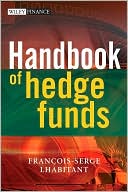
  • Handbook of Hedge Funds - byFrancois-Serge Lhabitant.
    Call Number: HG4530 .L469 2007 (Library West)
    ISBN/ISSN: 9780470026632. Wiley, 2007. 640 p. $141.75.
    Intended as a comprehensive reference for investors and fund and portfolio managers, Handbook of Hedge Funds combines new material with updated information from Francois-Serge L’habitant’s two other successful hedge fund books. This book features up-to-date regulatory and historical information, new case studies and trade examples, detailed analyses of investment strategies, discussions of hedge fund indices and databases, and tips on portfolio construction.
  • Hedge Funds: An Analytic Perspective - by Lo, Andrew W.
    Call Number: HG4530 .L59 2008 (Library West)
    ISBN/ISSN: 9780691132945. Princeton University Press, 2008. 337 p. $45.00
    The hedge fund industry has grown dramatically over the last two decades, with more than eight thousand funds now controlling close to two trillion dollars. Originally intended for the wealthy, these private investments have now attracted a much broader following that includes pension funds and retail investors. Because hedge funds are largely unregulated and shrouded in secrecy, they have developed a mystique and allure that can beguile even the most experienced investor. In Hedge Funds, Andrew Lo—one of the world's most respected financial economists—addresses the pressing need for a systematic framework for managing hedge fund investments. Arguing that hedge funds have very different risk and return characteristics than traditional investments, Lo constructs new tools for analyzing their dynamics, including measures of illiquidity exposure and performance smoothing, linear and nonlinear risk models that capture alternative betas, econometric models of hedge fund failure rates, and integrated investment processes for alternative investments.
  • The Heretics of Finance: Conversations with Leading Practitioners of Technical Analysis - by Andrew W. Lo and Jasmina Hasanhodzic.
    Call Number: HG4621 .L52 2009 (Library West)
    ISBN/ISSN: 9781576603161. Bloomberg Press, 2009. 288 p. $29.95.
    This book provides extraordinary insight into both the art of technical analysis and the character of the successful trader. Distinguished MIT professor Andrew W. Lo and researcher Jasmina Hasanhodzic interviewed thirteen highly successful, award-winning market professionals who credit their substantial achievements to technical analysis. Together, these lively and candid interviews tell the story of technical analysis in the words of the people who know it best. The first half of the book focuses on the technicians' careers: how and why they learned technical analysis, what market conditions increase their chances of making mistakes, what their average workday is like, to what extent trading controls their lives, whether they work on their own or with a team, and how their style of technical analysis is unique. The second half concentrates on technical analysis and addresses questions such as the following. Did the lack of validation by academics ever cause you to doubt technical analysis? Can technical analysis be applied to other disciplines? How do you prove the validity of the method? How has computer software influenced the craft? What is the role of luck in technical analysis? Are there laws that underlie market action? What traits characterize a highly successful trader? How do you test patterns before you start using them with real money? Interviewees include: Ralph J. Acampora, Laszlo Birinyi Jr., Walter Deemer, Paul F. Desmond, Gail M. Dudack, Robert J. Farrell, Ian McAvity, John J. Murphy, Robert R. Prechter Jr., Linda Bradford Raschke, Alan R. Shaw, Anthony W. Tabell, Stan Weinstein.
  • A History of Interest Rates - by Sydney Homer and Richard Sylla.
    Call Number: HG1621.H6 2005 (Library West)
    ISBN/ISSN: 0471732834. 4th ed., Wiley, 2005. 710 p. $80.00.
    "A History of Interest Rates" presents a very readable account of interest rate trends and lending practices over four millennia of economic history. Despite the paucity of data prior to the Industrial Revolution, authors Homer and Sylla provide a highly detailed analysis of money markets and borrowing practices in major economies. Underlying the analysis is their assertion that "the free market long-term rates of interest for any industrial nation, properly charted, provide a sort of fever chart of the economic and political health of that nation." Given the enormous volatility of rates in the 20th century, this implies we're living in age of political and economic excesses that are reflected in massive interest rate swings. Gain more insight into this assertion by ordering a copy of this book today.
  • How I Became a Quant: Insights From 25 of Wall Street's Elite - Edited by Richard R. Lindsey and Barry Schachter.
    Call Number: HG172.A2 H69 2007 (Library West)
    ISBN/ISSN: 9780470050620. John Wiley & Sons, 2007. 386 p. $29.95.
    "Quants"--those who design and implement mathematical models for the pricing of derivatives, assessment of risk, or prediction of market movements--are the backbone of today's investment industry. As the greater volatility of current financial markets has driven investors to seek shelter from increasing uncertainty, the quant revolution has given people the opportunity to avoid unwanted financial risk by literally trading it away, or more specifically, paying someone else to take on the unwanted risk.
  • How to Read a Financial Report: Wringing Vital Signs Out of the Numbers - by John A. Tracy.
    Call Number: HF5681.B2 T733 2004 (Library West & netLibrary)
    ISBN/ISSN: 0471478679. 6th ed., John Wiley, 2004. 205 p. $19.95.
    Hidden somewhere among all the numbers in a financial report is vitally important information about where a company has been and where it is going. This is especially relevant in light of the current corporate scandals. The sixth edition of this bestselling book is designed to help anyone who works with financial reports--but has neither the time nor the need for an in-depth knowledge of accounting--cut through the maze of accounting information to find out what those numbers really mean.
 

Investment Books: I - K

  • Inside Private Equity: The Professional Investor's Handbook - by James M. Kocis.
    Call Number: HG4751 .I57 2009 (Library West, Pending Order)
    ISBN/ISSN: 9780470421895. Wiley, 2009. 262 p. $70.00.
    Private equity fund investing is often viewed as more art than science, though in reality it requires an even blend of both skills. This book focuses on the science behind the art. It covers all the major concepts while introducing some great new ones, and must be required reading for serious private equity market participants.
  • Inside the House of Money: Top Hedge Fund Traders on Profiting in the Global Markets - by Steven Drobny.
    Call Number: HG4751.I57 2009 (Library West)
    ISBN/ISSN: 9780470379097. rev. edition, John Wiley & Sons, 2009. 414 p. $16.95.
    Inside the House of Money lifts the veil on the typically opaque world of hedge funds, offering a rare glimpse at how today's highest paid money managers approach their craft. Author Steven Drobny demystifies how these star traders make billions for well-heeled investors, revealing their theories, strategies and approaches to markets. Drobny, cofounder of Drobny Global Advisors, an international macroeconomic research and advisory firm, has tapped into his network and beyond in order assemble this collection of thirteen interviews with the industry's best minds. Whether Russian bonds, Pakistani stocks, Southeast Asian currencies or stakes in African brewing companies, no market or instrument is out of bounds for these elite global macro hedge fund managers. Inside the House of Money is a must-read for financial professionals and anyone else interested in understanding the complexities at stake in world financial markets.
  • Inside the Black Box: The Simple Truth About Quantitative Trading - By Rishi K. Narang
    Call Number: HG4529.5 .N37 2009 (Library West)
    ISBN/ISSN: 9780470432068. Wiley, 2009. 224 p. $49.95
    This book offers a straightforward look at quantitative trading. Investors, from high-net-worth individuals to pension funds, have never been more interested in quantitative trading - mainly due to the impressive returns they usually generate. And yet, few actually understand what goes on inside these black box trading strategies. That's why expert fund manager Rishi Narang has created "Inside the Black Box". In non-mathematical terms - and supplemented by anecdotes and real-world stories - this guide explains how quantitative trading strategies actually work. Written in a straightforward and accessible style, this book also skillfully explains how quant strategies fit into a portfolio, why they are valuable, and how to evaluate a quant manager.
  • Inside the Yield Book: The Classic that Created the Science of Bond Analysis - by Sidney Homer and Martin L. Leibowitz.
    Call Number: HG4936 .H65 2004 (Library West & netLibrary)
    ISBN/ISSN: 1576601595. Bloomberg Press, 2004. 205 p. $39.95.
    First published in 1972, "Inside the Yield Book underwent more than twenty-five printings and remains a standard among bond market professionals. This new edition brings the still-relevant classic back into print with a new introduction by coauthor Martin L. Leibowitz, now chief investment officer at TIAA-CREF, and a new foreword by Henry Kaufman, former vice chairman of Salomon Brothers and one of the financial community's most-successful and most-respected figures. "Inside the Yield Book takes the bond investor behind the scenes and reveals in nontechnical terms the precise nature of bond yields and the ways in which they're often misunderstood and misused. It corrects many misconceptions about bond prices and yields as calculated in the standard Yield Book, and it provides a set of tools to aid in bond investment strategy that have made it the standard reference on bond math within the field of fixed income.
  • The Intelligent Investor - by Benjamin Graham and Jason Zweig.
    Call Number: HG4521 .G665 2003 (Library West)
    ISBN/ISSN: 0060555661. rev. edition, HarperBusiness Essentials, 2003. 640 p. $19.95.
    The best book on investing ever written, this classic work offers sound and safe principles for investing - principles that have worked for more than the half century since the first edition was published. This revised edition features a new introduction, appendix and chapter updates. Since its original publication in 1949, Benjamin Graham's book has remained the most respected guide to investing, due to his timeless philosophy of 'value investing', which helps protect investors against areas of possible substantial error and teaches them to develop long-term strategies with which they will be comfortable down the road.
  • An Introduction to Mutual Funds Worldwide - by Ray Russell.
    Call Number: HG4530 .R87 2007 (Library West)
    ISBN/ISSN: 9780470062036. Wiley, 2007. 185 p. $39.95.
    This guide explains what mutual funds are, how they have developed and how they are used, regulated and administered across the globe. Both open-ended and closed-ended funds are described and the differences between the international markets, particularly USA, Europe and UK are addressed. Written by successful trainer and consultant, Ray Russell, the material reflects the growth and importance across the globe of mutual funds as a means of investing in worldwide economic development, whether to build a fund for retirement or otherwise.
  • Investing for Change: Profit from Responsible Investment - by Augustin Landier and Vinay B. Nair.
    Call Number: HG4515.13 .L36 2009 (Library West)
    ISBN/ISSN: 9780195370140. Oxford University Press, 2009. 168 p. $22.95.
    Academics turned portfolio managers, Landier and Nair offer up evidence for socially responsible investing's potential for financial gain and real social change, highlighting how returns, risks and goals differ in ethical investing. The book traces the evolution of socially responsible investing (SRI) from its 18th-century Quaker roots to the first socially responsible mutual fund, 37-year-old Pax World, and finally to more recent "responsibility indices" and the increasing availability of corporate sustainability reports.
  • Investment Banking Explained: An Insider's Guide to the Industry - by Michel Fleuriet.
    Call Number: HG4534 .F57 2008 (Library West)
    ISBN/ISSN: 9780071497336. Mcgraw-Hill, 2008. 354 p. $49.95.
    Investment Banking Explained provides a clear overview of this complex industry. It covers the history, key terms, structures, and strategies of investment banking and breaks the business down into its respective specialties—from traders, brokers, and analysts to relationship managers, hedgers, and retirement planners—illustrating how each contributes to the industry as a whole. Written by a high-level investment-banking veteran, this comprehensive guide examines the operations of the world's most successful firms and their shifting approach to risk. It then travels to capital markets around the world to explain how investment banks are forging their international strategies.
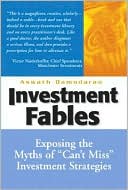
  • Investment Fables: Exposing the Myths of "can't miss" Investment Strategies - by Aswath Damodaran.
    Call Number: HG4529 .D358 2004 (Library West)
    ISBN/ISSN: 0131403125. Financial Times Prentice Hall, 2004. 539 p. $29.95.
    Most investors make their decisions based on "stories" that sound logical...stories backed by anecdotes claiming enormous success. Value investing sounds great. So does momentum investing. So does choosing high-dividend or low P/E stocks. So do many other strategies...even strategies that flatly contradict each other. They can't all work, no matter how good they sound. But some work better than others. And it's possible to combine the best elements from several strategies...maximizing your return and slashing your risk. In this book, one of the world's leading investment and valuation researchers will show you how. No "happy anecdotes" here: This is a thorough, objective analysis of the actual results of 13 different investment approaches...and their current outlook.
  • The investment, Financing, and Valuation of the Corporation - by Myron J. Gordon.
    Call Number: 658.15G664i (STORAGE AUXILIARY)
    ISBN/ISSN: R. D. Irwin, 1962. 256 p.
    The Dividend Discount Model is also known as the "Gordon model" named after professor Myron J. Gordon who popularized the model. Professor Gordon wrote about the model in a book he authored in 1962 titled The Investment, Financing and Valuation of the Corporation. Since then the model has appeared in virtually every investments textbook. In his book titled Investment Valuation, Aswath Damodaran, a professor at New York University states: "In the long term, undervalued (overvalued) stocks from the dividend discount model outperform (underperform) the market index on a risk-adjusted basis." Although no investment model works for all stocks all of the time, the dividend discount model has proven to be a reliable way of selecting stocks that on average will perform relatively well on a long-term basis. It should be among the tools that investors use to select at least some of the stocks in their portfolio.
  • The Investor's Anthology: Original Ideas from the Industry's Greatest Minds - by Charles D. Ellis and James R. Vertin.
    Call Number: HG4910 .E463 1997 (Library West)
    ISBN/ISSN: 0471176052. J. Wiley, 1997. 297 p. $29.95.
    In what feels like a series of personal audiences, Warren Buffett, John Templeton and dozens of others share the experiences of lifetimes in the market. Reach into this jewel box of an anthology and you will come up with gems of wit, wisdom, and analysis that reflect a unique combination of experience and insight in the essential elements that investing, like life itself, requires.
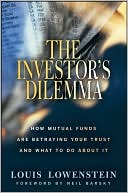
  • The Investor's Dilemma: How Mutual Funds are Betraying Your Trust and What to Do About It - by Louis Lowenstein.
    Call Number: HG4930 .L689 2008 (Library West)
    ISBN/ISSN: 9780470117651. J. Wiley and Sons, 2008. 220 p. $29.95.
    Based on cutting-edge research by leading corporate critic Louis Lowenstein, The Investor’s Dilemma: How Mutual Funds Are Betraying Your Trust and What to Do About It reveals how highly overpaid fund sponsors really operate and walks you through the conflicts of interest found throughout the industry. Page by page, you’ll discover the real problems within the world of mutual funds and learn how to overcome them through a value-oriented approach to this market.
  • Investors and Markets: Portfolio Choices, Asset Prices, and Investment Advice - by William F. Sharpe.
    Call Number: HG4529.5 .S53 2007 (Library West)
    ISBN/ISSN: 9780691128429. Princeton University Press, 2007. 221 p. $39.95.
    In Investors and Markets, Nobel Prize-winning financial economist William Sharpe shows that investment professionals cannot make good portfolio choices unless they understand the determinants of asset prices. But until now asset-price analysis has largely been inaccessible to everyone except PhDs in financial economics. In this book, Sharpe changes that by setting out his state-of-the-art approach to asset pricing in a nonmathematical form that will be comprehensible to a broad range of investment professionals, including investment advisors, money managers, and financial analysts. Bridging the gap between the best financial theory and investment practice, Investors and Markets will help investment professionals make better portfolio choices by being smarter about asset prices. Based on Sharpe's Princeton Lectures in Finance, Investors and Markets presents a method of analyzing asset prices that accounts for the real behavior of investors. Sharpe makes this technique accessible through a new, one-of-a-kind computer program (available for free on his Web site, at http://www.stanford.edu/~wfsharpe/apsim/index.html) that enables users to create virtual markets, setting the starting conditions and then allowing trading until equilibrium is reached and trading stops. Program users can then analyze the final portfolios and asset prices, see expected returns, and measure risk.
  • Irrational Exuberance - by Robert J. Shiller.
    Call Number: HG4910 .S457 2005 (Library West)
    ISBN/ISSN: 0691123357. 2nd edition, Princeton University Press, 2005. 304 p. $16.00
    In this timely and prescient update of his celebrated 2000 bestseller, Robert Shiller returns to the topic that gained him international fame: market volatility. Having predicted the stock market collapse that began just one month after the first edition was published, he now expands the book to cover other markets that have become volatile, particularly the recently red-hot housing market. Shiller amasses impressive evidence to support his argument that the recent housing market boom bears many similarities to the stock market bubble of the late 1990s, and may eventually be followed by declining home prices for years to come. After stocks plummeted when the bubble burst in 2000, investors moved their money into housing. This precipitated the inflated real estate prices not only in America but around the world, Shiller maintains. Hence, irrational exuberance did not disappear—it merely reappeared in other settings. Building on the original edition, Shiller draws out the psychological origins of volatility in financial markets, this time folding real estate into his analysis. He broadens the evidence that investing in capital markets of all kinds in the modern free-market economy is inherently unstable—subject to the profoundly human influences captured in Alan Greenspan’s now-famous phrase, “irrational exuberance.
  • The Irwin Guide to Using the Wall Street Journal - by Michael B. Lehmann.
    Call Number: HB3743 .L44 2005 (Library West)
    ISBN/ISSN: 0071416641. 7th edition, McGraw-Hill, 2005. 407 p. $34.95.
    First published in 1984, The Irwin Guide to Using The Wall Street Journal has shown over a quarter of a million investors how to locate and profitably use the investment information found daily in The Wall Street Journal. Now, this invaluable reference has been updated to include the latest charts, examples, and information on every facet of the investing world, with sample articles and data taken directly from the pages of The Journal itself! In addition to being the definitive tool for understanding and gaining every edge from reading The Wall Street Journal, this perennial bestseller is a complete guidebook on investing.
 

Investment Books: L - O

  • Liar's Poker: Rising Through the Wreckage on Wall Street - by Michael Lewis.
    Call Number: HG4928.5 .L48 1989 (Library West)
    ISBN/ISSN: 0393027503. NORTON, 1989. 249 p. $14.00.
    It was wonderful to be young and working on Wall Street in the 1980s: never had so many twenty-four-year-olds made so much money in so little time. In this shrewd and wickedly funny, Michael Lewis describes an astonishing era and his own rake’s progress through a powerful investment bank. From an unlikely beginning (art history at Princeton?) he rose in two short years from Salomon Brothers trainee to Geek (the lowest form of life on the trading floor) to Big Swinging Dick–a bond salesman who could turn over millions of dollars’ worth of doubtful bonds with just one call. A born storyteller, Michael Lewis shows us how things really worked on Wall Street. The bond traders, wearing greed and ambition as badges of honor, might well have swaggered straight from the pages of Bonfire of the Vanities. But for all their outrageous behavior, they were in fact presiding over enormous changes in the world economy.
  • The Little Book of Common Sense Investing: The Only Way to Guarantee Your Fair Share of Stock Market Returns - by John C. Bogle.
    Call Number: HG4530 .B635 2007 (Library West)
    ISBN/ISSN: 9780470102107. John Wiley and Sons, 2007. 216 p. $19.95.
    Investing is all about common sense. Owning a diversified portfolio of stocks and holding it for the long term is a winner’s game. Trying to beat the stock market is theoretically a zero-sum game (for every winner, there must be a loser), but after the substantial costs of investing are deducted, it becomes a loser’s game. Common sense tells us—and history confirms—that the simplest and most efficient investment strategy is to buy and hold all of the nation’s publicly held businesses at very low cost. The classic index fund that owns this market portfolio is the only investment that guarantees you with your fair share of stock market returns. To learn how to make index investing work for you, there’s no better mentor than legendary mutual fund industry veteran John C. Bogle. Over the course of his long career, Bogle—founder of the Vanguard Group and creator of the world’s first index mutual fund—has relied primarily on index investing to help Vanguard’s clients build substantial wealth. Now, with The Little Book of Common Sense Investing, he wants to help you do the same.
  • Lombard Street: A Description of the Money Market - by Walter Bagehot.
    Call Number: HG3000.L82 B3 1979b (Library West)
    ISBN/ISSN: 0883556774. Hyperion Press, 1979 [originally published in 1873]. 176 p.
    Much of what we consider modern economics is the work of British journalist and economist Walter Bagehot, one of the first editors of the influential newspaper The Economist and an early proponent of business cycles. Here, he develops his theory of central banking, much of which continues to impact financial thinking today. First published in 1873, Lombard Street explores the history of London's Lombard Street, from how it came to be the traditional home of banks and moneylenders to how the value of money was determined by the institutions there. Joint stocks, private banking, and the regulation of the banking reserve: Bagehot's discussion of these fundamental economic issues makes this a vital resource for anyone wishing to understand financial history. WALTER BAGEHOT (1826-1877) also wrote The English Constitution (1867), Physics and Politics (1872), and The Postulates of English Political Economy (1885), among other works.
  • Manias, Panics, and Crashes: A History of Financial Crises - by Charles Poor Kindleberger and Robert Z. Aliber.
    Call Number: HB3722 .K56 2005 (Library West)
    ISBN/ISSN: 0471467146. 5th edition, John Wiley and Sons, 2005. 309 p. $19.95.
    Manias, Panics and Crashes, fifth edition, is a scholarly and entertaining account of the way that mismanagement of money and credit has led to financial explosions over the centuries. Covering such topics as the history and anatomy of crises, speculative manias, and the lender of last resort, this book has been hailed as 'a true classic...both timely and timeless.' In this new, updated Fifth Edition, Kindleberger and Aliber expand upon the ideas presented in the previous edition, and include two new chapters on the real estate price bubble that ocurred in Norway, Sweden and Finland at the end of the 1980s, and the three asset price bubbles that occurred between 1985 and 2000 in Japan and other Asian countries. Selected as one of the best investment books of all time by the Financial Times, Manias, Panics and Crashes puts the turbulence of the financial world in perspective.
  • The Mutual Fund Business - by Robert C. Pozen and Sandra D. Crane.
    Call Number: HG4930 .P63 2002 (Library West)
    ISBN/ISSN: 0618166106. 2nd edition, Houghton Mifflin Co., 2002. 589 p. $57.25.
    In the last decade, the number of mutual funds has tripled to more than 6,000 funds with more than $4 trillion in assets and more than 60 million individual shareholders. Yet there is no book on the mutual fund business designed for MBA and undergraduate business courses. The Mutual Fund Business, assembled by a leading industry expert, fills this gap. The book is divided into four parts. Part I contains a general introduction to mutual funds, a short history of the industry, and an overview of mutual fund regulation. Part II covers portfolio management of stock funds and bond funds, as well as execution of fund trades. Part III discusses the marketing and servicing of mutual funds in the direct, intermediary, and retirement channels. Finally, Part IV delves into more specialized topics: the financial dynamics of mutual funds, mutual funds as institutional investors, the role of technology in mutual fund complexes, and the internationalization of mutual funds.
  • Mutual Fund Industry Handbook: A Comprehensive Guide for Investment Professionals - by Lee L. Gremillion.
    Call Number: HG4930 .G738 2005 (Library West)
    ISBN/ISSN: 9780471736240. John Wiley & Sons, 2005. 381 p. $75.00.
    '"The Mutual Fund Industry Handbook" is a remarkably important work ...I am profoundly impressed by the broad and comprehensive sweep of information and knowledge that this book makes available to industry participants, college and business school students, and anyone else with a serious interest in this industry' - From the Foreword by John C. Bogle President, Bogle Financial Markets Research Center Founder and former chief executive, The Vanguard Group. This authoritative book explains the complexities of the phenomenal industry in simple terms. Investors like the fact that mutual funds offer professional management, easy diversification, liquidity, convenience, a wide range of investment choices, and regulatory protection."Mutual Fund Industry Handbook" touches on all of those features and focuses on the diverse functions performed in the day-to-day operations of the mutual fund industry.
  • The Myth of the Rational Market: Wall Street's Impossible Quest for Predictable Markets - by Justin Fox.
    Call Number: HB3731 .F69 2009 (Library West)
    ISBN/ISSN: 9780060598990. Collins Business, 2009. 382 p. $25.95.
    Chronicling the rise and fall of the efficient market theory and the century-long making of the modern financial industry, Justin Fox's The Myth of the Rational Market is as much an intellectual whodunit as a cultural history of the perils and possibilities of risk. The book brings to life the people and ideas that forged modern finance and investing, from the formative days of Wall Street through the Great Depression and into the financial calamity of today. It's a tale that features professors who made and lost fortunes, battled fiercely over ideas, beat the house in blackjack, wrote bestselling books, and played major roles on the world stage. It's also a tale of Wall Street's evolution, the power of the market to generate wealth and wreak havoc, and free market capitalism's war with itself. The efficient market hypothesis—long part of academic folklore but codified in the 1960s at the University of Chicago—has evolved into a powerful myth. It has been the maker and loser of fortunes, the driver of trillions of dollars, the inspiration for index funds and vast new derivatives markets, and the guidepost for thousands of careers. The theory holds that the market is always right, and that the decisions of millions of rational investors, all acting on information to outsmart one another, always provide the best judge of a stock's value. That myth is crumbling. Celebrated journalist and columnist Fox introduces a new wave of economists and scholars who no longer teach that investors are rational or that the markets are always right. Many of them now agree with Yale professor Robert Shiller that the efficient markets theory “represents one of the most remarkable errors in the history of economic thought.” Today the theory has given way to counterintuitive hypotheses about human behavior, psychological models of decision making, and the irrationality of the markets. Investors overreact, underreact, and make irrational decisions based on imperfect data. In his landmark treatment of the history of the world's markets, Fox uncovers the new ideas that may come to drive the market in the century ahead.
  • The New Paradigm for Financial Markets: The Credit Crisis of 2008 and What it Means - by George Soros.
    Call Number: HB3722 .S673 2008 (Library West)
    ISBN/ISSN: 9781586486839. PublicAffairs, 2008. 162 p. $22.95.
    In the midst of the most serious financial upheaval since the Great Depression, legendary financier George Soros explores the origins of the crisis and its implications for the future. In a concise essay that combines practical insight with philosophical depth, Soros makes an invaluable contribution to our understanding of the great credit crisis and its implications for our nation and the world
  • The Only Guide to Alternative Investments You'll Ever Need: The Good, the Flawed, the Bad, and the Ugly - by Larry E. Swedroe and Jared Kizer.
    Call Number: HG4529.5 .S936 2008 (Library West)
    ISBN/ISSN: 9781576603109. Bloomberg Press, 2008. 288 p. $25.95.
    "Investors are actively seeking investment options other than equities, bonds, and cash that will provide diversification and improved returns. The book offers an overview of a wide range of alternative investments, explaining what each is and how it works. The author shares his opinions on which to seriously consider and which to avoid at all costs"--Provided by publisher
  • The Only Investment Guide You'll Ever Need - by Andrew P. Tobias.
    Call Number: HG4521 .T6 2002 (Library West)
    ISBN/ISSN: 0156011077. revised edition, Harcourt, 2002. 266 p. $10.98.
    In print for more than 20 years, this classic personal finance reference, updated to take into account ongoing changes in the financial world, is a must-have for anyone who wants to manage their money more effectively. As Andrew Tobias notes in his introduction, this book wasn't written for people who want to get rich quickly -- the advice presented here is smart, commonsensical, and designed for those who are courting long-term success. Some of Tobias's recommendations will sound familiar and comfortable -- pay off your credit cards on time, conserve energy, do research online before you buy, save money whenever you can -- while others, like his belief that you should trust no one when it comes to your money, come across as somewhat more hard-nosed; however, they are all worth reading about and, more important, putting into practice.
  • The Options Trading Body of Knowledge: The Definitive Source for Information About the Options Industry - By Michael C. Thomsett
    Call Number: HG6024.A3 T476 2010 (Library West, On Order)
    ISBN/ISSN: 9780137142934. Financial Times Prentice Hall, 2010. 286 p
    To trade successfully, traders need an authoritative, up-to-date guide to all the strategies available to them. Now, renowned options expert and best-selling author Michael C. Thomsett has created the definitive reference for options traders at all levels of experience. Thomsett systematically illuminates each key technique and strategy: how trades are structured, how to assess risk, and when each strategy is most applicable. For most strategies, Thomsett presents detailed tables and illustrations identifying profit zones, loss zones, and breakeven points. This book thoroughly explains how option premium develops based on various elements of value, walks through the calculation of returns on options trading, discusses how federal taxation works in the options market, shows how stocks are picked for options trading, and provides a complete glossary and additional resources for traders.
 

Investment Books P - R

  • Panic: The Story of Modern Financial Insanity - by Michael Lewis.
    Call Number: HB3722 .P36 2009 (Library West)
    ISBN/ISSN: 9780141042312. Penguin Books, 2008. 391 p. $27.95.
    A masterful account of today's money culture, showing how the underpricing of risk leads to catastrophe.When it comes to markets, the first deadly sin is greed. Michael Lewis is our jungle guide through five of the most violent and costly upheavals in recent financial history: the crash of '87, the Russian default (and the subsequent collapse of Long-Term Capital Management), the Asian currency crisis of 1999, the Internet bubble, and the current sub-prime mortgage disaster. With his trademark humor and brilliant anecdotes, Lewis paints the mood and market factors leading up to each event, weaves contemporary accounts to show what people thought was happening at the time, and then, with the luxury of hindsight, analyzes what actually happened and what we should have learned from experience.As he proved in Liar's Poker , The New New Thing , and Moneyball , Lewis is without peer in his understanding of market forces and human foibles. He is also, arguably, the funniest serious writer in America.
  • Pioneering Portfolio Management: An Unconventional Approach to Institutional Investment - by David F. Swensen.
    Call Number: HG4529.5 .S94 2009 (Library West)
    ISBN/ISSN: 9781416544692. 2nd edition, Free Press, 2009. 408 p. $35.00.
    During his fourteen years as Yale's chief investment officer, David F. Swensen has transformed the management of the university's portfolio. Largely by focusing on nonconventional strategies, including a heavy allocation to private equity, Swensen has achieved an annualized return of 16.2 percent, which has propelled Yale's endowment into the top tier of institutional funds. Now, this acknowledged leader of fund managers draws on his experience and deep knowledge of the financial markets to provide a compendium of powerful investment strategies. Swensen presents an overview of the investment world populated by institutional fund managers, pension fund fiduciaries, investment managers, and trustees of universities, museums, hospitals, and foundations. He offers penetrating insights from his experience managing Yale's endowment, ranging from broad issues of goals and investment philosophy to the strategic and tactical aspects of portfolio management. Swensen's exceptionally readable book addresses critical concepts such as handling risk, selecting investment advisers, and negotiating the opportunities and pitfalls in individual asset classes. Fundamental investment ideas are illustrated by real-world concrete examples, and each chapter contains strategies that any manager can put into action. Swensen's book is an indispensable roadmap for creating a successful investment program for every institutional fund manager.
  • A Random Walk Down Wall Street: The Time Tested Strategy for Successful Investing - by Burton G. Malkiel.
    Call Number: HG4521 .M284 2003 (Library West)
    ISBN/ISSN: 9780393062458. W.W. Norton & Co., 2007. 414 p. $29.95.
    Updated with a new chapter that draws on behavioural finance, the field that studies the psychology of investment decisions, here is the best-selling, authoritative and gimmick-free guide to investing. Burton Malkiel evaluates the full range of investment opportunities, from stocks, bonds and money markets to insurance, home ownership and tangible assets such as gold or collectibles. This edition includes new strategies for rearranging your portfolio for retirement, along with the book's classic life-cycle guide to investing, which matches the needs of investors in any age bracket. "A Random Walk Down Wall Street" long ago established itself as the first book to purchase before starting a portfolio and this "entertaining and informative" ("Financial Times") book remains the best investing guide money can buy.
  • Real Estate Finance & Investment Manual - by Jack Cummings.
    Call Number: HD1375 .C854 2008 (Library West)
    ISBN/ISSN: 9780470260401. 9th edition, Wiley, 2008. 669 p. $39.95.
    Updated and revised to include ten years of new developments in real estate investment, Real Estate Finance and Investment Manual, Ninth Edition is the definitive guide to financing for all real estate investors. Understand all the financing options, learn how to choose an appropriate strategy, read about insider techniques, and get hands-on experience with case studies and helpful checklists.
  • Real Estate Investment Handbook - by Timothy G. Haight and Daniel D.Singer.
    Call Number: HD1382.5.H35 2005 (Library West)
    ISBN/ISSN: 0471649228. John Wiley, 2005. 544 p. $69.95.
    Investing in commercial real estate can provide excellent risk-return opportunities for both the large and small investor. Unlike equity securities, commercial real estate often generates a substantial and predictable cash flow over time—and the compounding effect of this cash flow can significantly enhance the performance of most investment portfolios.
    Filled with in-depth insight and practical advice, The Real Estate Investment Handbook is an essential tool for current and aspiring commercial real estate investors looking to develop and evaluate commercial real estate properties. Throughout the book, experts G. Timothy Haight and Daniel D. Singer offer careful examinations of the various types of commercial real estate available, the measures within the markets used to evaluate their performance, and the intricacies of the markets in which they are traded.

  • Reminiscences of a Stock Operator - by Edwin Lefevre.
    Call Number: HG4572 .L4 2005 (Library West)
    ISBN/ISSN: 0471678767. Illustrated Edition, J. Wiley, 2005. 253 p. $29.95.
    First published in 1923, Reminiscences is a fictionalized account of the life of the trader Jesse Livermore. The book tells the story of Livermore's progression to day trading in the then so-called New England "bucket shops", from there to market speculator, market maker, and market manipulator, and finally to Wall Street where he made and lost his fortune several times over. Along the way, Livermore learns many lessons, which he happily shares with the reader. Despite the book's age, it continues to offer insights into the art of trading and speculation. In Jack Schwage'rs Market Wizards, Reminiscences was quoted as a major source of stock trading learning material for experienced and new traders by many of the traders who Schwager interviewed.
  • The Rise of Mutual Funds: An Insider's View - by Matthew P. Fink.
    Call Number: HG4530 .F527 2009 (Library West)
    ISBN/ISSN: 9780195336450. Oxford University Press, 2009. 320 p. $34.95.
    In 1940 few Americans had heard of mutual funds. Today U.S. mutual funds are the largest financial industry in the world, with over 88 million shareholders and over $11 trillion in assets. Cottage Industry to Financial Giant describes the developments that have produced mutual funds' long history of success. Among these developments are: * formation of the first mutual funds in the roaring 20s * how the 1929 stock market crash, a disaster for most financial institutions, spurred the growth of mutual funds * establishment in 1934, over FDR's objection, of the United States Securities and Exchange Commission, the federal agency that regulates mutual funds * enactment of the Revenue Act of 1936, the tax law that saved mutual funds from extinction * passage of the Investment Company Act of 1940, the "constitution" of the mutual fund industry * the creation in 1972 of money market funds, which totally changed the mutual fund industry and the entire U.S. financial system *enactment of the Employee Retirement Income Security Act of 1974, which created Individual Retirement Accounts * the accidental development of 401(k) plans, which have revolutionized the way Americans save for retirement * the 2003 trading abuses, the greatest scandal ever in the history of the mutual fund industry Many events have never been reported before. Others have been discussed in works on other subjects such as retirement plans. Thus, this is first book that pulls together the many strands of mutual funds' unique history. Moreover, the author was personally involved in developments over the past forty years, and much of the book is a personal narrative regarding the people and events that have produced mutual funds' success.
 

Investment Books S - U

  • Security Analysis - by Benjamin Graham and David L. Dodd.
    Call Number: HG4910 .G729 2008 (Library West)
    ISBN/ISSN: 9780071592536 (set/book and CD). 6th edition. McGraw-Hill, 766 p. 2008, c1934. $75.00.
    First published in 1934, "Security Analysis" is one of the most influential financial books ever written. Selling more than one million copies through five editions, it has provided generations of investors with the timeless value investing philosophy and techniques of Benjamin Graham and David L. Dodd.. As relevant today as when they first appeared nearly 75 years ago, the teachings of Benjamin Graham, the father of value investing, have withstood the test of time across a wide diversity of market conditions, countries, and asset classes.. This new sixth edition, based on the classic 1940 version, is enhanced with 200 additional pages of commentary from some of todays leading Wall Street money managers. These masters of value investing explain why the principles and techniques of Graham and Dodd are still highly relevant even in todays vastly different markets. Featuring a foreword by Warren E. Buffett (in which he reveals that he has read the 1940 masterwork at least four times), this new edition of "Security Analysis" will reacquaint you with the foundations of value investing more relevant than ever in the tumultuous 21st century markets.
  • Short Selling: Strategies, Risks and Rewards - Edited by Frank J. Fabozzi.
    Call Number: HG6041 .S487 2004 (Library West)
    ISBN/ISSN: 0471660205. Wiley, 2004. 416 p. $69.95.
    Although considered risky business in the finance community, short selling is recognized by many as an essential element of portfolio management. This guide for managers and investors presents practical suggestions from investment professionals and academics for using the technique of short selling to enhance financial performance. A sampling of topics includes the mechanics of the equity lending market, the information content of short sales, and the economic profit approach to short selling.
  • Smart and Simple Financial Strategies for Busy People - by Jane Bryant Quinn.
    Call Number: HG179 .Q565 2006 (Library West)
    ISBN/ISSN: 9780743269940. Simon and Schuster, 2006. 242 p. $26.00.
    Are you too busy to pay much attention to your money? Do you worry that maybe you haven't been doing the right things? This book is for you, from Jane Bryant Quinn, the most trusted voice in personal finance today. Her classic bestseller, Making the Most of Your Money, guided a generation toward smart and sensible financial choices. Here she strips away the extras, choosing the best financial ideas and products available today. They're all you need to create a successful and long-lasting financial plan. It's money management the No Worry way.
  • The Snowball: Warren Buffett and the Business of Life - Alice Schroeder.
    Call Number: HG172.B84S37 2008 (Library West)
    ISBN/ISSN: 9780553805093. Bantam Books, 2008. 960 p. $35.00.
    Here is THE book recounting the life and times of one of the most respected men in the world, Warren Buffett. The legendary Omaha investor has never written a memoir, but now he has allowed one writer, Alice Schroeder, unprecedented access to explore directly with him and with those closest to him his work, opinions, struggles, triumphs, follies, and wisdom. The result is the personally revealing and complete biography of the man known everywhere as “The Oracle of Omaha.” Never before has Buffett spent countless hours responding to a writer’s questions, talking, giving complete access to his wife, children, friends, and business associates—opening his files, recalling his childhood. It was an act of courage, as The Snowball makes immensely clear. Being human, his own life, like most lives, has been a mix of strengths and frailties. Yet notable though his wealth may be, Buffett’s legacy will not be his ranking on the scorecard of wealth; it will be his principles and ideas that have enriched people’s lives. This book tells you why Warren Buffett is the most fascinating American success story of our time.
  • The Stock Market - by R.W. Hafer and Scott E. Hein.
    Call Number: HG4551 .H23 2007 (Library West)
    ISBN/ISSN: 9780313338243. Greenwood Press, 2007. 140 p. $55.00.
    The stock market--the virtual "place" where corporations raise capital--has come to symbolize business more profoundly than any other entity or institution. This book provides a glimpse into the history, development, regulation, and increasing importance that the stock market plays in business and economic growth, as well as the investment strategies of individuals--in the U.S. and around the world, including Europe, Japan, Hong Kong, and "emerging markets" in the developing world that are rapidly integrating into the global economy. To explore the roles and workings of the stock market, the authors trace its evolution from its origins on Wall Street in the 1700s to the present, and examine the varied ways in which it is used to generate economic value.
  • Stocks for the Long Run - by Jeremy J. Siegel.
    Call Number: HG4661 .S53 2002 (Library West)
    ISBN/ISSN: 007137048X. 3rd edition, McGraw-Hill, 2002. 388 p. $29.95.
    In this long awaited and eagerly anticipated update, Jeremy Siegel provides his legendary perspective and guidance to an investment world turned upside down. Siegel offers solid strategies for long-term investment success in the stock market, shows investors how to understand and interpret the movements of the market over time, and includes a detailed description of market performances since 1802--including nearly 100 original charts and graphs. WIth all the new material and the perspective that Siegel offers for these scary times, he has pulled off the rare feat: making a classic even better. I rate Stocks for the Long Run a strong buy.
  • The Theory of Investment Value - by John Burr Williams.
    Call Number: HG4521.W48 1938 (Library West & Storage Auxiliary)
    ISBN/ISSN: Harvard University Press, 1938. 613 p. $30.95.
    This book was first printed in 1938, having been written as a Ph.D. thesis at Harvard in 1937. Our good friend, Peter Bernstein mentioned this book several times in his excellent Capital Ideas which was published in 1992. Why the book is interesting today is that it still is important and the most authoritative work on how to value financial assets. As Peter says: "Williams combined original theoretical concepts with enlightening and entertaining commentary based on his own experiences in the rough-and-tumble world of investment." Williams' discovery was to project an estimate that offers intrinsic value and it is called the 'Dividend Discount Model' which is still used today by professional investors on the institutional side of markets.
  • The Two Trillion Dollar Meltdown: Easy Money, High Rollers, and the Great Credit Crash - by Charles R. Morris.
    Call Number: HG4910 .M667 2008b (Library West)
    ISBN/ISSN: 9781586486914. revised and updated, Public Affairs, 2009. 208 p. $13.95.
    Now fully updated with the latest financial developments, this is the bestselling book that briefly and brilliantly explains how we got into the economic mess that is the Credit Crunch. With the housing markets unravelling daily and distress signals flying throughout the rest of the economy, there is little doubt that we are facing a fierce recession. In crisp, gripping prose, Charles R. Morris shows how got into this mess. He explains the arcane financial instruments, the chicanery, the policy misjudgments, the dogmas, and the delusions that created the greatest credit bubble in world history. The Two Trillion-Dollar Meltdown, updated to include the latest financial developments, is indispensable to understanding how the world economy has been put on the brink.
  • Understanding Futures Markets - by Robert W. Kolb and James A. Overdahl.
    Call Number: HG6024 U6 K66 2005 (Library West)
    ISBN/ISSN: 9781405134033. 6th edition, Blackwell, 2005. 588 p. $94.95.
    Now in its sixth edition, Understanding Futures Markets by Robert Kolb (University of Colorado) and James Overdahl (Chief Economist of the Commodity Futures Trading Commission) provides the most comprehensive coverage of futures markets available. Clearly written and accessible, this is the authoritative text for students and practitioners alike looking for an in-depth treatment of futures markets.
  • Understanding Wall Street - by Jeffrey B. Little
    Call Number: HG4910 .L54 2004 (Library West, On Order)
    ISBN/ISSN: 9780071633222. 5th edition, McGraw-Hill 2010. 371 p. $18.95.
    An investing classic--updated to meet the realities of a changing economy For 30 years, Understanding Wall Street has been helping investors gain a firm grasp of how the stock market functions. Now, when readers need it most, we provide important updates while retaining the foundations that have made the book a perennial bestseller. Understanding Wall Street, Fifth Edition, has new sections and information on the current shift to exchange traded funds (ETFs), using the Internet as an investing tool, recent scandals, and other subjects important to readers today.
 

Investment Books V - Z

  • Wall Street: A History from its Beginnings to the Fall of Enron - by Charles R. Geisst.
    Call Number: HG4572 .G4 2004 (Library West)
    ISBN/ISSN: 0195170601. Revised edtion Oxford University Press, 2004. 438 p., $18.95.
    In the seven years since the publication of the first edition of Wall Street, America's financial industry has undergone a series of wrenching events that have dramatically changed the nation's economic landscape. The bull market of the 1990's came to a close, ushering in the end of the dot com boom, a record number of mergers occurred, and accounting scandals in companies like Enron and WorldCom shook the financial industry to its core. In this wide-ranging volume, financial historian Charles Geisst provides the first history of Wall Street, explaining how a small, concentrated pocket of lower Manhattan came to have such enormous influence in national and world affairs. In this updated edition, Geisst sums up the recent turbulence that has threatened America's financial industry. He shows how in 1997 thirty NASDAQ market makers paid a record $1.3 billion fine for price irregularities in stocks. He makes sense of the closing of the bull market, and explains a major change in the accounting rules for mergers that caused monumental losses for companies like AOL Time Warner. And he recounts how in the aftermath of the speculative fever that swept Wall Street in the 1990's, the scandals at Enron, Tyco, Worldcom, and Conseco represent a last gasp of mergermania and a fallout from a bubble-like market.
  • The Wall Street Primer: The Players, Deals, and Mechanics of the U.S. Securities Market - by Jason A. Pedersen.
    Call Number: HG4910 .P422 2009 (Library West)
    ISBN/ISSN: 9780313365157. Praeger, 2009. 246 p. $44.95.
    How does Wall Street, that great bastion of American Capitalism, really work? This book provides the multifaceted answer to that question clearly, concisely, and on a practical level for anyone seeking to better understand the inner workings of the capital markets. Tracing the dealings of a fictional company from inception to maturity, The Wall Street Primer provides the reader with practical insights on Wall Street and its functions and operations. Written for professionals new to the industry, investors, job seekers, students, brokers and traders, and entrepreneurs and business executives, the book goes well beyond "nice to know" information. Instead, it will be, for many people, "must have" information about organizations, professions, and transactions that can help them make deals, get ahead in their careers, or better fund and build their businesses.
  • What Every Investor Needs to Know about Accounting Fraud - by Jeff Madura.
    Call Number: HF5686 .C7 m317 2004 (Library West)
    ISBN/ISSN: 0071422765. McGraw-Hill, 2004. 164 p. $15.95.
    Everything investors who skipped accounting class need to know to spot--and steer clear of--companies whose numbers don't add up Individual investors today are painfully aware that accounting fraud is more widespread than ever, yet often they aren't sure what this fraud looks like or even where to look. What Every Investor Needs to Know About Accounting Fraud explains common accounting maneuvers, distortions, and outright deceptions that savvy investors must be able to recognize and steer clear of, all in a concise, easy-to-understand format. Professor Jeff Madura has created a book that is both accessible and informative, and doesn't talk down to the reader. Concise yet complete, it provides investors with: Methods for uncovering scams that distort revenues, hide expenses, and more Studies of infamous accounting frauds and how they could have been avoided.
  • Winning the Loser's Game: Timeless Strategies for Successful Investing - by Jeff Madura.
    Call Number: (Library West, On Order))
    ISBN/ISSN: 9780071545495. 5th edition McGraw-Hill 2009. 234 p. $29.95.
    The bestselling investment guide tailored to help readers succeed in today's ailing economy In this new edition of the bestselling Winning the Loser's Game, Charles Ellis concentrates on longterm strategies that allow time, compounding, and the natural ebbs and flows of the market to work for the individual investor. Historical data proves that when individual investors fight to beat the market, they are bound to lose. Ellis explains how readers can use the market to their advantage if they deploy its powers carefully and wisely. With a writing style that is concise and to the point, Ellis had added timely material to his timeless classic, making Winning the Loser's Game more relevant than ever before.
  • Your Money and your Brain: How the new Science of Neuroeconomics Can Help Make You Rich - by Jason Zweig.
    Call Number: HG4515.15 .Z84 2007 (Library West)
    ISBN/ISSN: 9780743276689. Simon & Schuster, 2007. 340 p. $26.00.
    What happens inside our brains when we think about money? Quite a lot, actually, and some of it isn't good for our financial health. In Your Money and Your Brain, Jason Zweig explains why smart people make stupid financial decisions — and what they can do to avoid these mistakes. Zweig, a veteran financial journalist, draws on the latest research in neuroeconomics, a fascinating new discipline that combines psychology, neuroscience, and economics to better understand financial decision making. He shows why we often misunderstand risk and why we tend to be overconfident about our investment decisions. Your Money and Your Brain offers some radical new insights into investing and shows investors how to take control of the battlefield between reason and emotion.
 

Business Librarian

Profile ImagePeter Z. McKay
Contact Info:
513 Library West
352.273.2634
Send Email

Subjects:
Business Librarian

 
Description

  Loading content... please wait